Best Bitcoin Casino in Canada 2026: How Crypto Deposits, Faster Payouts, and Provably Fair Games Are Changing the Way Canadian Players Gamble Online
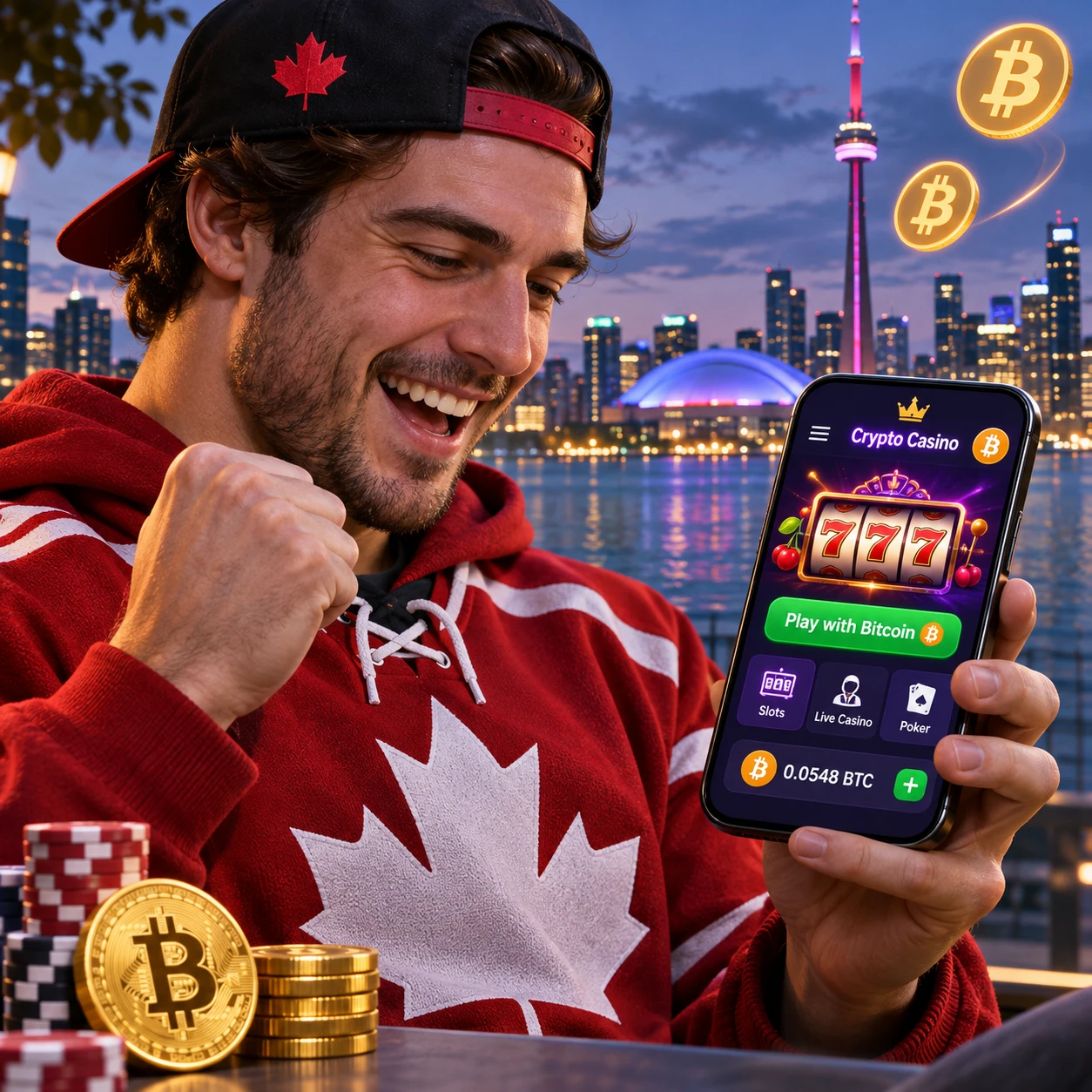
Not long ago, putting money into an online casino from Canada meant an Interac e-Transfer, a wait, then another wait when you wanted it back out. In 2026, a player in Halifax can top up from a phone wallet before the kettle boils — and see a withdrawal confirmed on-chain before the coffee goes cold. The games didn't get better. The rails underneath them did.
I've spent the last while pulling apart how crypto casinos actually work for Canadian players. Not the marketing copy — the mechanics. Where the money sits, what it costs to move, why one withdrawal clears in four minutes while another sits for two days, and what 'provably fair' genuinely proves.
Below I'll go through those three pillars, the checks worth running before you send a dollar, and where the legal and responsible-gambling lines actually sit north of the border. Some of it is tedious. All of it matters if you'd rather not learn it the expensive way.
Why Bitcoin Casinos Are Reshaping Canadian Online Gambling in 2026
A crypto casino is an online gambling site that settles deposits, withdrawals, and sometimes individual wagers in bitcoin or stablecoins instead of dollars through a payment processor. The games are mostly the same slots, blackjack, roulette and crash titles you'd find anywhere else. What's different is the money layer — no card networks, no bank in the middle, no processor quietly deciding your deposit looks suspicious.
Now contrast that with the model Canadians already know. PlayNow in B.C., OLG's.ca in Ontario, Espacejeux in Quebec, and the iGO-licensed private operators serving Ontario since the market opened. Those sites are regulated, audited, and — for plenty of players — genuinely fine.
But they share one structural limitation. Withdrawals route through banking partners, and banking partners take business days. Nobody built that system around your convenience.
Three things shoved crypto casinos into the mainstream here. Mobile wallet adoption made self-custody feel normal instead of technical. CAD-to-crypto on-ramps got fast and cheap enough that funding an account stopped feeling like a chore. And players got tired of being told a payout was 'processing.'
Crypto casino vs. traditional Canadian online casino
Account verification exists on both sides — crypto doesn't erase KYC, it just relocates it. On a provincial site you verify once at signup. On a crypto casino you may browse anonymously, but you'll hit identity checks before a large withdrawal. Deposit methods differ sharply: Interac, Visa and PayPal on one side; BTC, ETH, USDT, and sometimes e-transfers through a third-party on-ramp on the other.
Withdrawal windows are the big gap — three to five business days versus minutes to hours. Bonus structures diverge too: crypto sites lean on reload and cashback offers rather than giant matched-deposit welcome packages, and their wagering terms are frequently steeper.
Dispute recourse is where traditional sites win outright. A licensed Ontario operator answers to iGO and the AGCO. An offshore crypto casino answers to its own jurisdiction, whatever that jurisdiction happens to be.
One thing doesn't change, though: the house edge. The math inside the games is identical. Crypto rails move money differently — they don't make you any more likely to win.
How Crypto Deposits Work for Canadian Players
The path from a Canadian bank account to a casino balance has three hops, and every one of them carries a cost and a wait.
First, you buy crypto — usually on an exchange like Kraken or Newton, or through an in-app on-ramp that takes Interac e-Transfer or a card. Second, the coins land in a wallet you control. Third, you send them to the casino's deposit address. Bitcoin confirmations run roughly ten minutes per block on average; Litecoin, Tron-based USDT and similar networks settle far quicker.
Which is why stablecoins became the default for serious players. If you're sitting in a two-hour blackjack session, you don't want your bankroll moving 6% because bitcoin had a bad afternoon. USDT and USDC keep the session denominated in dollars while still riding crypto rails.
Wallets, exchanges, and CAD on-ramps
Two wallet choices, basically. A custodial wallet — the exchange holds your keys — is easier and fine for small amounts. Self-custody, where you hold the keys yourself, is what you want for anything meaningful. It's also the only option that lets you verify a payout transaction independently.
Expect KYC at both ends. Canadian exchanges are registered with FINTRAC and will ask for government ID, often a selfie too. Casinos vary: many allow small deposits with no verification but require full documents before withdrawals above a threshold. Read that threshold before you deposit. Not after you win.
What deposits actually cost
Here's a worked example, because the percentages get slippery fast. You deposit $500 CAD. The on-ramp spread might run 0.5–1.5% ($2.50–$7.50). The network fee on a USDT-TRC20 transfer is usually under a dollar; on bitcoin it can swing from $1 to $15 depending on congestion. Add a casino minimum, often $10–$20 equivalent. Realistic all-in cost: roughly $4 to $15, or 0.8% to 3%.
Compare that to a typical 2.5% card deposit fee — $12.50 on the same $500 — plus the small detail that many card issuers code gambling transactions as cash advances, which starts the interest clock on day one. Crypto isn't automatically cheaper. At the low end it clearly is, and it's consistently more predictable.
Faster Payouts — The Shift That's Changing Player Expectations
Ask any group of players what made them switch and withdrawal speed comes up first. The traditional sequence — request, pending period, document review, processor batch, three to five business days — was built for fraud control, not for players. Crypto payouts cut most of that out. Once a withdrawal clears internal risk review, the transaction hits the chain and the player watches it confirm.
I want to be straight about 'instant,' though. It almost never means automatic. Most reputable crypto casinos run withdrawals through a risk check — sometimes automated, sometimes manual for first-time or large requests. A clean account with completed KYC and cleared wagering usually sees funds in five to thirty minutes. A flagged account waits. That gap is the whole story.
The transparency is the underrated part. On a traditional site you get an email saying 'your withdrawal has been approved.' On a crypto casino you get a transaction hash you can paste into a block explorer and follow yourself. That's a meaningfully different relationship with the operator.
What actually slows a crypto withdrawal
- KYC backlogs. Submitting documents mid-withdrawal adds a day. Verify at signup.
- Bonus wagering requirements. Deposit bonuses lock funds until you play through the multiplier. Check it before you claim.
- Chain congestion. Bitcoin fees spike during busy periods. Stablecoin networks rarely do.
- Address mistakes. A wrong or wrong-network address means the funds are gone. Copy, paste, and check the first and last four characters.
Provably Fair Games — Trust You Can Verify Yourself
Provably fair is a cryptographic commitment scheme, and it's simpler than the name suggests. Before you bet, the casino generates a server seed and sends you a hash of it. You supply a client seed, or accept the one offered. Each bet increments a nonce counter. Server seed, client seed and nonce get hashed together to produce the outcome.
Because the server seed was locked in before you played, the result was fixed in advance. And because you can reveal that seed afterward, you can recompute the hash yourself and confirm nothing was altered mid-session. The casino can't cheat without breaking the hash.
That's a real consumer benefit. Instead of trusting a certification badge from a lab you've never heard of, you get math you can check. Know the limits, though. Provably fair covers the shuffle or the RNG. It says nothing about the house edge baked into the paytable, and nothing about the terms attached to your bonus. Those still need reading.
How to check a result yourself in three steps
One: before your session, set a client seed — any string you like, ideally nothing guessable. Two: play. Three: after the session, request the server seed reveal and paste server seed, client seed and nonce into a public verifier (most casinos host one; several independent ones exist). Compare the output to the result you got.
I do this on a handful of sessions rather than every spin. Enough to confirm the mechanism is honest, not so often that it turns into a second job.
What Makes the Best Bitcoin Casino in Canada?
There's no single answer, because 'best' depends on whether you care more about payout speed, game variety or bonus value. What you can do is apply a consistent framework. Is the licence displayed and verifiable? Are CAD on-ramps and major coins both supported? Are payout times published rather than promised? Does provably fair cover table games and not just crash titles? Are bonus terms written in plain language with the wagering multiplier stated up front? Does the mobile experience actually work? And is support reachable by live chat at the hours you play?
If you'd rather skip the trial-and-error, this breakdown of the best bitcoin casino options for Canadian players compares licensing, payout speeds and bonus terms side by side — a faster route than opening a dozen accounts to test withdrawal times yourself.
A seven-point checklist before you deposit
- Licence name and number visible in the footer
- Withdrawal limits and processing times stated upfront
- Wagering multiplier disclosed before you opt into a bonus
- Provably fair available on table games, not just originals
- CAD-friendly on-ramp without excessive spread
- Live support that responds within minutes
- Published responsible-gambling and self-exclusion policy
Legal Status, Taxes, and Playing Responsibly in Canada
Canada's gambling landscape is provincial, not federal. Ontario runs a regulated iGaming market through iGO and the AGCO; Loto-Québec, BCLC and the Atlantic lotteries operate their own platforms. Offshore crypto casinos sit outside those frameworks and are licensed elsewhere — Curaçao and Anjouan are the common ones.
That doesn't make playing at them illegal, but it does mean your recourse is limited if something goes wrong. Check where an operator is licensed instead of assuming, and read what that regulator actually offers in the way of dispute resolution.
On tax: Canada doesn't tax gambling winnings for casual players. Crypto complicates the picture, though, because the CRA treats cryptocurrency as a commodity. Buying, selling and swapping can carry capital gains or income implications depending on your activity level. Moving meaningful volume? Talk to an accountant. This isn't the place to guess.
And the house edge doesn't care about any of it. Over time it grinds. Set a deposit limit before the session, not during it. Treat losses as the cost of entertainment rather than a down payment on a win. Use the tools: ConnexOntario at 1-866-531-2600, your province's helpline, and operator-level self-exclusion. Every legitimate site has them.
The Bottom Line for Canadian Players
Three things changed. Deposits got faster, because crypto rails cut out the intermediaries. Payouts got faster, because there's no processor batch to wait on. And verification moved from a badge you're asked to trust to a hash you can check yourself.
The technology changed the plumbing. It did not change the odds. Discipline still decides how a session ends.
Are crypto casinos legal in Canada? Playing at an offshore crypto casino isn't a criminal offence for players, but those sites aren't licensed by provincial regulators, so protections differ from PlayNow or an iGO-licensed operator.
Do I need to report winnings? Casual gambling winnings aren't taxable in Canada, but crypto transactions can trigger capital gains or income treatment. Get professional advice for anything substantial.
What's the minimum deposit? Usually the equivalent of $10–$20, though network fees make small deposits inefficient — aim for $50 or more.
Run whichever operator you're considering against the seven-point checklist before you send funds. Five minutes of reading beats a week of waiting on a withdrawal.